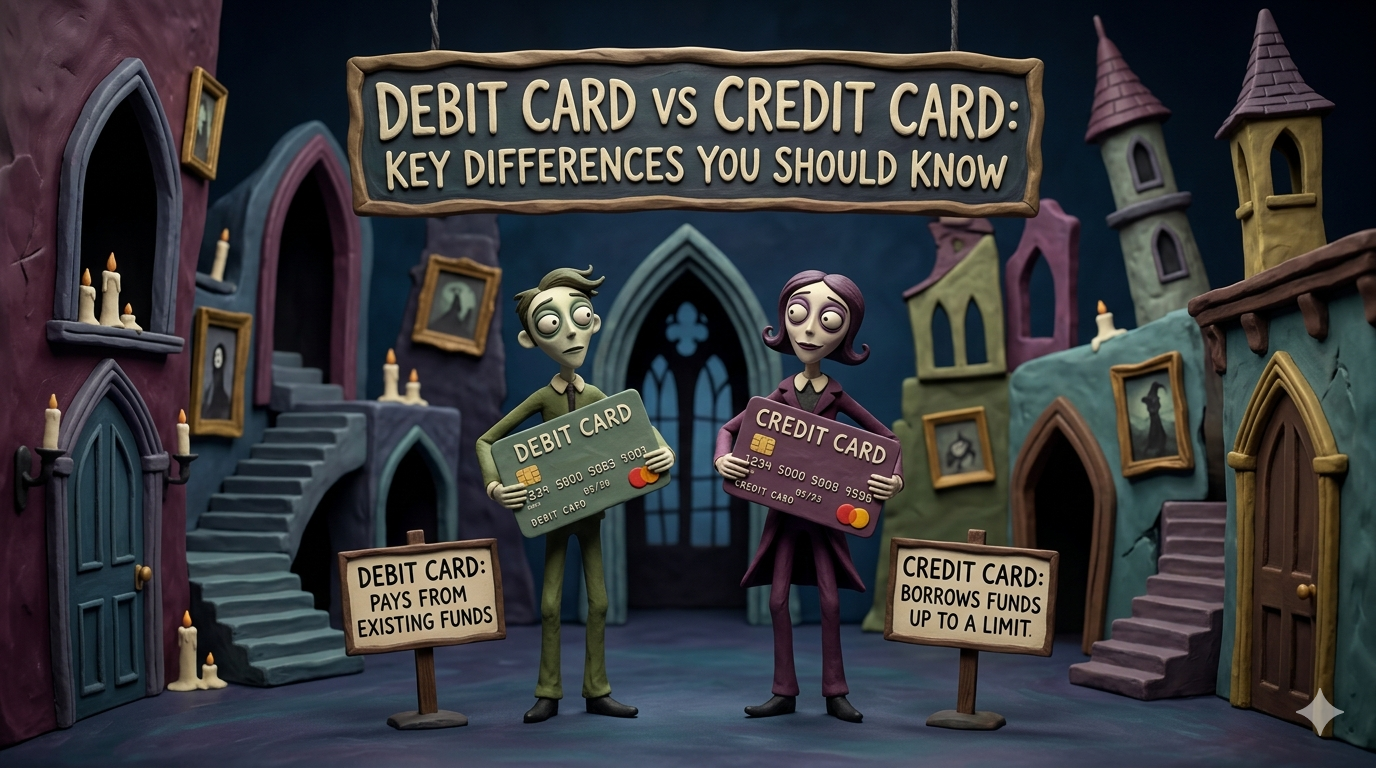
Debit Card vs Credit Card: Key Differences You Should Know
In today’s digital banking world, both debit cards and credit cards are essential payment tools. While they may look similar, they work in completely different ways. Understanding the difference between a debit card and a credit card is important for managing your money wisely, avoiding debt, and choosing the right payment method for your lifestyle. The main difference is simple: a debit card uses your own money directly from your bank account, while a credit card lets you borrow money from the bank and repay it later. :contentReference[oaicite:0]{index=0}
In this complete guide, we will explain the key differences, features, pros and cons, and help you decide which card is best for your financial needs.
What Is a Debit Card?
A debit card is linked directly to your savings or current bank account. Whenever you make a payment, the amount is instantly deducted from your available balance. This means you can only spend the money you already have in your account. Debit cards are commonly used for ATM cash withdrawals, online shopping, POS payments, and utility bill payments. :contentReference[oaicite:1]{index=1}
Because debit cards use your own funds, there is no borrowing involved and no interest charges. They are ideal for daily spending and budgeting.
What Is a Credit Card?
A credit card allows you to borrow money from the bank up to a pre-approved limit. Instead of deducting money from your bank account immediately, the bank pays the merchant first, and you repay the bank later through a monthly bill. If you do not pay the full bill on time, interest charges may apply. :contentReference[oaicite:2]{index=2}
Credit cards are useful for emergencies, large purchases, travel bookings, rewards, and building your credit history.
Debit Card vs Credit Card: Key Differences
| Feature | Debit Card | Credit Card |
|---|---|---|
| Money Source | Your bank account balance | Borrowed money from bank |
| Payment Time | Instant deduction | Pay later |
| Interest | No interest | Interest if unpaid |
| Credit Score | No impact | Helps build credit score |
| Rewards | Limited offers | Cashback, points, travel rewards |
| Overspending Risk | Low | Higher |
The biggest difference is whether you are spending your own money or borrowing from the bank. :contentReference[oaicite:3]{index=3}
Advantages of a Debit Card
- Helps control spending
- No debt risk
- No interest charges
- Easy ATM withdrawals
- Simple to get with a bank account
- Great for students and beginners
Debit cards are best for people who want better budgeting and do not want to deal with monthly bills.
Advantages of a Credit Card
- Builds credit history
- Useful in emergencies
- Offers cashback and reward points
- Travel perks and insurance benefits
- Better fraud protection
- Useful for hotel and flight bookings
Many banks now provide excellent cashback, EMI, and shopping discount offers on credit cards. :contentReference[oaicite:4]{index=4}
Disadvantages of Debit Cards
- No credit score improvement
- Limited fraud protection compared to credit cards
- No major rewards programs
- Transaction may fail if account balance is low
Disadvantages of Credit Cards
- High interest charges if unpaid
- Late fees and penalties
- Can lead to debt trap
- May encourage overspending
If not used responsibly, credit cards can create serious financial problems because of compounding interest and minimum due traps.
Which One Is Better?
The answer depends on your financial habits.
If you want to spend only what you have and avoid debt, a debit card is the better option. But if you want rewards, stronger fraud protection, travel benefits, and the ability to build your credit score, a credit card is often the smarter choice—provided you pay the full balance on time. :contentReference[oaicite:5]{index=5}
For most people, the best strategy is to use both wisely:
- Use debit card for daily expenses and ATM withdrawals
- Use credit card for online shopping, travel, and reward-based spending
Best Use Cases for Each Card
Use Debit Card For:
- Groceries
- Cash withdrawals
- Budget-friendly spending
- Students and salary users
Use Credit Card For:
- Travel bookings
- Expensive gadgets
- Online subscriptions
- EMI purchases
- Emergency medical bills
Final Thoughts
When comparing debit card vs credit card, the right choice depends on how you manage money. Debit cards keep your spending under control because they use your own funds instantly. Credit cards offer more flexibility, rewards, and financial benefits but require discipline.
The smartest approach is to understand the strengths of both and use them according to your needs. If used correctly, both cards can make your financial life easier, safer, and more rewarding.
Leave a Reply