Author: qwcxr

  • Student Bank Cards: Best Features, Limits, and Benefits

    Student Bank Cards: Best Features, Limits, and Benefits

    Student Bank Cards: Best Features, Limits, and Benefits

    A student bank card is a special type of debit card designed for students who are starting their financial journey. It is usually linked to a student savings account and helps young users manage money safely while learning essential budgeting skills. These cards work just like regular debit cards but often come with lower fees, simplified banking features, and spending limits to encourage responsible money management.

    In many banks, student debit cards are issued to individuals aged between 13 to 25 depending on the country and bank policy. They are widely used for ATM withdrawals, online shopping, mobile payments, and daily expenses. Most importantly, student cards help users build financial discipline without the risk of debt. ([turn0search1])

    What Is a Student Bank Card?

    A student bank card is a debit card connected to a student or youth bank account. It allows users to access their own money directly from the bank for payments and withdrawals. Unlike credit cards, student debit cards do not allow borrowing, which means there is no interest or debt risk.

    Students can use these cards for:

    • ATM cash withdrawals
    • Online shopping and bill payments
    • In-store purchases (POS machines)
    • Mobile wallet transactions
    • Receiving allowances or salary from part-time jobs

    Best Features of Student Bank Cards

    Student debit cards come with useful features designed for safe and simple banking:

    1. Easy Account Access

    Student cards are linked directly to a savings account, making it easy to withdraw cash, send money, and pay bills instantly using ATM or mobile banking systems. ([turn0search3])

    2. Low or Zero Maintenance Fees

    Most student accounts offer reduced or no monthly maintenance fees, helping students save money while learning banking basics.

    3. Spending Limits for Safety

    Many banks apply daily withdrawal and purchase limits on student cards. This helps prevent overspending and reduces fraud risks. ([turn0search2])

    4. Mobile Banking and Alerts

    Students can track spending in real-time using mobile apps and receive instant SMS or push notifications for every transaction.

    5. Fraud Protection

    Student debit cards come with PIN security, chip protection, and instant card-blocking features to protect against unauthorized transactions. ([turn0search2])

    Transaction Limits of Student Bank Cards

    Student cards usually have controlled limits compared to regular debit cards. These limits vary by bank, but commonly include:

    • ATM withdrawal limit: Daily cash withdrawal cap
    • Online spending limit: Controlled e-commerce usage
    • POS payment limit: In-store purchase restriction
    • International usage: Sometimes restricted or disabled by default

    These limits help students manage money responsibly and protect accounts from fraud or accidental overspending. ([turn0search2])

    Benefits of Student Bank Cards

    1. Financial Independence

    Student cards allow young users to manage their own money without relying on cash or others. This builds confidence and independence.

    2. Safe Cashless Payments

    Students can pay digitally using cards instead of carrying cash, reducing the risk of theft or loss.

    3. Helps Build Money Habits

    Since spending is limited to available balance, students naturally learn budgeting and financial discipline. ([turn0search1])

    4. Easy Online Shopping

    Student debit cards can be used for online shopping, subscription services, and educational tools, making digital learning easier.

    5. No Debt Risk

    Unlike credit cards, student debit cards do not allow borrowing, so users cannot fall into debt or pay interest charges.

    6. Parental Control (Optional)

    Some banks offer parental monitoring features so guardians can track spending and set limits for younger users.

    Common Restrictions of Student Bank Cards

    Although student cards are useful, they may come with some limitations:

    • Lower daily transaction limits
    • Fewer reward programs or cashback offers
    • Limited international usage in some banks
    • Restricted overdraft or borrowing options

    These restrictions are designed to ensure safe and controlled usage for students. ([turn0search2])

    Who Should Use a Student Bank Card?

    Student bank cards are ideal for:

    • School and college students
    • First-time bank users
    • Part-time job earners
    • Teenagers learning money management

    Student Card vs Regular Debit Card

    While both cards work similarly, student debit cards are more controlled and beginner-friendly. Regular debit cards may offer higher limits and more benefits, but student cards focus on safety, learning, and budgeting.

    Final Thoughts

    Student bank cards are one of the best financial tools for young users who are starting to manage money independently. With features like low fees, spending limits, mobile banking access, and strong security, they offer a safe way to learn financial responsibility.

    If used wisely, a student debit card can be the first step toward building strong financial habits and preparing for future banking products like credit cards and loans.
  • How International Bank Cards Work for Foreign Payments

    How International Bank Cards Work for Foreign Payments

    How International Bank Cards Work for Foreign Payments

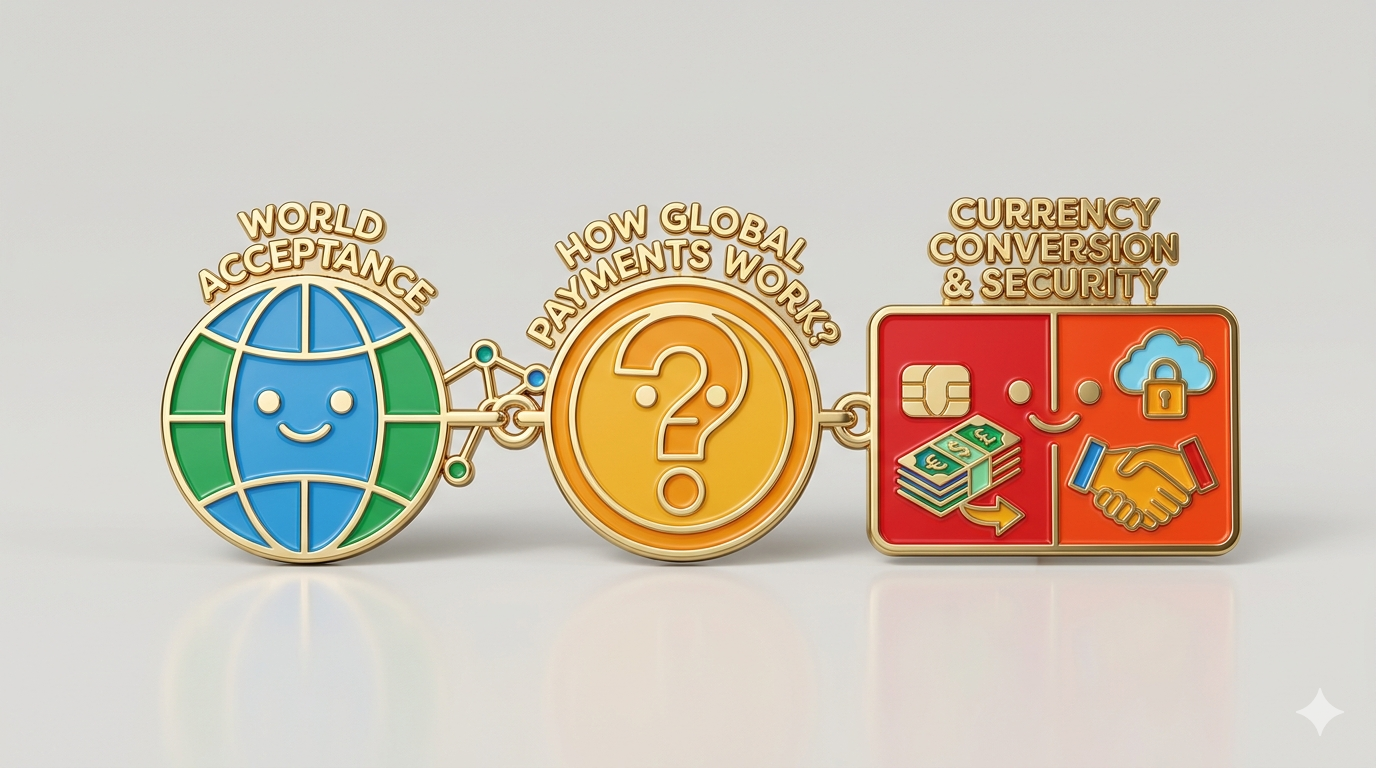
    In today’s global economy, making payments across countries has become very common. Whether you are shopping from international websites, booking flights, paying for hotel stays, or traveling abroad, an international bank card makes these transactions simple and secure. But many people still do not fully understand how international bank cards work for foreign payments and what happens behind the scenes when you pay in another currency.

    In simple terms, an international bank card (usually a Visa or Mastercard debit or credit card) allows you to make payments outside your home country by converting your local currency into foreign currency automatically through global payment networks.

    What Is an International Bank Card?

    An international bank card is a debit or credit card that can be used outside your country for online and offline transactions. These cards are powered by global payment networks such as Visa or Mastercard, which enable cross-border transactions between banks worldwide.

    Unlike local ATM-only cards, international cards support:

    • Foreign currency payments
    • International online shopping
    • ATM withdrawals abroad
    • Hotel and travel bookings
    • Global merchant payments

    Most modern debit and credit cards issued by banks today already support international usage, but sometimes this feature must be enabled separately in your banking app.

    How International Payments Work Step by Step

    When you use your bank card for a foreign payment, a fast and secure process happens in seconds:

    1. You make a payment in a foreign currency (for example USD, EUR, or GBP).
    2. The merchant sends the request to their payment processor.
    3. The request goes through Visa or Mastercard network.
    4. Your bank receives the transaction request.
    5. The currency is converted into your local currency.
    6. Your bank checks balance or credit limit.
    7. Payment is approved or declined instantly.

    This entire process usually takes only a few seconds, even if the transaction is happening between different countries.

    Currency Conversion in International Payments

    One of the most important parts of international card usage is currency conversion. When you pay in a foreign currency, your bank automatically converts it into your local currency using the current exchange rate.

    This conversion may include:

    • Real-time exchange rate
    • Bank conversion fee
    • Network processing fee (Visa/Mastercard)

    For example, if you buy something worth $100 USD, your bank will convert it into your local currency and add small conversion charges.

    Types of International Bank Cards

    1. International Debit Card

    This card is linked directly to your bank account and allows international payments as long as your account has sufficient balance and international usage is enabled.

    2. International Credit Card

    A credit card allows you to borrow money up to a limit and is widely accepted globally. It is often preferred for travel, hotel bookings, and emergencies due to better fraud protection and travel benefits.

    3. Virtual International Card

    Some banks offer virtual cards for online international shopping, which provide extra security through temporary card numbers or tokenization.

    Where You Can Use International Bank Cards

    International bank cards are widely accepted in:

    • Global eCommerce websites (Amazon, eBay, etc.)
    • Airline ticket bookings
    • Hotels and resorts
    • Foreign ATM withdrawals
    • Subscription services (Netflix, Spotify, etc.)
    • Freelance platforms and digital services

    Fees and Charges for International Use

    When using your bank card abroad, you may be charged additional fees such as:

    • Foreign transaction fee (usually 1%–3%)
    • Currency conversion fee
    • ATM withdrawal fee (if used abroad)
    • Dynamic currency conversion charges (optional merchant rate)

    These fees vary depending on your bank and card type.

    Security Features of International Cards

    International bank cards come with strong security systems to protect your money during cross-border transactions:

    • OTP verification for online payments
    • EMV chip technology
    • 3D Secure authentication
    • Fraud detection systems
    • Instant transaction alerts

    These features help prevent unauthorized international usage of your card.

    How to Enable International Transactions

    If your card is not working for foreign payments, you may need to activate international usage:

    • Open your mobile banking app
    • Go to “Card Settings” or “Manage Card”
    • Enable “International Transactions”
    • Set spending limits if required
    • Confirm via OTP

    Some banks also require you to enable ATM withdrawals abroad separately.

    Common Problems in International Payments

    • International feature not enabled
    • Insufficient balance or credit limit
    • Bank fraud protection block
    • Wrong billing address
    • Merchant not accepting your card network

    If a payment fails, checking card settings or contacting your bank usually solves the issue quickly.

    Tips for Using International Bank Cards Safely

    • Always enable transaction alerts
    • Use trusted international websites only
    • Disable international use when not needed
    • Avoid public Wi-Fi for payments
    • Monitor exchange rates before large purchases

    Final Thoughts

    Understanding how international bank cards work for foreign payments helps you use your card more confidently across borders. These cards make global shopping, travel, and digital payments simple by automatically converting currencies and processing transactions through secure global networks.

    Whether you are a traveler, freelancer, or online shopper, an international debit or credit card is an essential financial tool for today’s connected world. By using it wisely and keeping security settings enabled, you can enjoy safe and seamless global transactions.

  • Best Tips to Use Your Bank Card Securely for Online Shopping

    Best Tips to Use Your Bank Card Securely for Online Shopping

    Best Tips to Use Your Bank Card Securely for Online Shopping

    Online shopping is fast, convenient, and now part of everyday life. But with that convenience comes risk. Fake websites, phishing links, public Wi-Fi attacks, fake shopping apps, and card-testing scams can all put your money at risk. The good news is that using your bank card securely for online shopping is simple when you follow a few smart habits. Security experts strongly recommend shopping only on trusted websites, enabling transaction alerts, using OTP or 2FA, and avoiding public Wi-Fi while making payments. Recent fraud reports in 2026 also highlight the rise of BIN attacks and card testing scams, making card-freeze controls and digital wallets even more important. :contentReference[oaicite:0]{index=0}

    This complete guide covers the best tips to use your bank card safely for online shopping so you can protect your debit card, personal data, and bank balance.

    1) Shop Only on Trusted Websites

    Always buy from well-known eCommerce websites, official brand stores, or trusted marketplaces. Before entering your card details, check:

    • Website starts with https://
    • Padlock icon in browser
    • Correct brand spelling
    • Real customer reviews
    • Clear return and contact policy

    Scam sites often copy real brands with slightly changed domain names. :contentReference[oaicite:1]{index=1}

    2) Never Use Public Wi-Fi for Payments

    Avoid entering card details on public Wi-Fi at cafes, airports, hotels, or shopping malls. Hackers can intercept your traffic on open networks. Use your home Wi-Fi, mobile data, or a trusted VPN instead. :contentReference[oaicite:2]{index=2}

    3) Use OTP, 2FA, and 3D Secure

    Always keep OTP verification, 2FA, and 3D Secure authentication enabled. These extra security layers make it much harder for fraudsters to use your card even if they somehow get the card number and CVV. :contentReference[oaicite:3]{index=3}

    4) Prefer Digital Wallets Over Direct Card Entry

    Using trusted wallets like Apple Pay, Google Pay, or your bank’s own tokenized wallet is safer than typing your card number on multiple websites. Wallet payments use tokenization, which hides the real card number from merchants and reduces BIN attack risk. :contentReference[oaicite:4]{index=4}

    5) Avoid Saving Card Details on Unknown Websites

    Many shopping sites ask to save your card for faster checkout. This is safe only on highly trusted platforms. On smaller or unknown websites, always choose “Do not save card” to reduce exposure if the website is hacked.

    6) Enable Instant Transaction Alerts

    Turn on SMS, email, and app notifications for every card transaction. This helps you detect unauthorized charges immediately and freeze the card before more damage happens. Experts recommend checking transactions weekly, not just monthly. :contentReference[oaicite:5]{index=5}

    7) Use Virtual Cards for Online Shopping

    If your bank offers a virtual debit card or one-time card number, use it for online shopping. Virtual cards often allow:

    • Temporary card numbers
    • Single-use transactions
    • Merchant-specific locking
    • Custom spending limits

    This is one of the safest ways to shop online in 2026.

    8) Set Low Online Spending Limits

    Most banking apps allow separate limits for:

    • Online shopping
    • International transactions
    • Daily spending

    Keeping low limits reduces possible losses from fraud or card testing attacks. :contentReference[oaicite:6]{index=6}

    9) Watch Out for Fake Shopping Apps

    Scammers now create fake mobile shopping apps that look like real stores. Before installing any app:

    • Check publisher name
    • Read reviews
    • Check download count
    • Avoid brand-new low-rated apps

    Never be the first person to install a suspicious app. :contentReference[oaicite:7]{index=7}

    10) Freeze Your Card When Not Shopping

    One of the smartest modern safety tips is to freeze or lock your debit card when not using it. Many 2026 fraud victims reported that this single feature protected them from automated BIN attacks and card testing bots. :contentReference[oaicite:8]{index=8}

    Common Online Shopping Card Scams

    • Fake checkout pages
    • Phishing SMS discount links
    • BIN attacks
    • Card testing fraud
    • Fake refund scams
    • Counterfeit shopping apps
    • Public Wi-Fi interception

    Final Thoughts

    The best way to use your bank card securely for online shopping is to combine safe shopping habits with your bank’s built-in security tools. Trusted websites, OTP verification, digital wallets, low transaction limits, and card freeze controls can dramatically reduce fraud risk.

    In today’s fast-changing digital world, staying alert to new threats like BIN attacks and fake shopping apps is just as important as protecting your PIN. Follow these tips and enjoy safe, stress-free online shopping.

  • Common Reasons Why Your Bank Card Gets Blocked

    Common Reasons Why Your Bank Card Gets Blocked

    Common Reasons Why Your Bank Card Gets Blocked

    It can be frustrating when your bank card suddenly stops working at an ATM, online checkout, or store payment terminal. In most cases, the block is a security measure designed to protect your money, not a permanent problem. Banks automatically block debit and ATM cards when they detect unusual activity, repeated wrong PIN attempts, expired cards, account issues, or suspected fraud. The good news is that most card blocks can be resolved quickly through the banking app, ATM, or a call to customer care. :contentReference[oaicite:0]{index=0}

    This complete guide explains the most common reasons why your bank card gets blocked, how to fix the issue fast, and how to avoid it in the future.

    1) Multiple Wrong PIN Attempts

    One of the most common reasons is entering the wrong PIN several times. Most banks temporarily block the card after 3 incorrect PIN attempts to prevent unauthorized access. This usually happens at ATMs or POS machines. :contentReference[oaicite:1]{index=1}

    If this happens, you may need to reset the PIN through your banking app, ATM, or customer care.

    2) Suspicious or Unusual Transactions

    Banks use automated fraud detection systems that compare every transaction with your normal spending behavior. If you suddenly make:

    • A very large purchase
    • Multiple fast transactions
    • A payment from a new city or country
    • An unusual online subscription

    the bank may instantly block the card as a safety measure. This is one of the most common fraud-related triggers. :contentReference[oaicite:2]{index=2}

    3) International Transactions Without Notice

    If you use your card abroad or on foreign websites without enabling international usage, many banks automatically decline or block the card. Some banks also require OTP-enabled international merchants only, which can cause unexpected declines on gaming, app, or subscription websites. :contentReference[oaicite:3]{index=3}

    4) Card Expired

    Every bank card has an expiry date. Once the month and year pass, the card automatically becomes inactive. Many users think the card is blocked, but it is simply expired and needs replacement. :contentReference[oaicite:4]{index=4}

    5) Insufficient Balance or Negative Account

    If your account has low balance, pending holds, or a negative amount due to fees, some banks may temporarily restrict card usage. This is especially common when maintenance charges or automatic subscriptions reduce the available balance. :contentReference[oaicite:5]{index=5}

    6) Daily Limit Exceeded

    Your debit card usually has separate limits for:

    • ATM withdrawals
    • POS spending
    • Online shopping
    • International payments

    If you cross the daily limit, the bank may decline transactions and temporarily block further use until the next 24-hour cycle. :contentReference[oaicite:6]{index=6}

    7) Card Locked by You in the Banking App

    Sometimes the block is accidental. Many users freeze or disable their own cards in the banking app and forget about it. If online transactions, ATM use, or international payments are toggled off, the card may appear blocked. :contentReference[oaicite:7]{index=7}

    8) Suspicious ATM or Skimming Risk

    If the bank detects possible ATM skimming, cloned card activity, or multiple failed chip reads, it may proactively block your card to prevent theft. This often happens after using unsafe third-party ATM booths.

    9) KYC or Account Verification Problems

    Sometimes the card gets blocked because your account KYC is incomplete, expired, or under review. Missing NID updates, address mismatch, or mobile number changes can trigger temporary restrictions.

    10) Lost or Stolen Card Report

    If you reported your card as lost—even by mistake—the bank will permanently block it and issue a replacement. This is a safety feature to stop misuse immediately. :contentReference[oaicite:8]{index=8}

    How to Unblock Your Bank Card

    • Check card controls in your banking app
    • Reset PIN through ATM or app
    • Enable international usage
    • Wait for daily limit reset
    • Call official customer care
    • Visit nearest branch if KYC issue
    • Request replacement if expired

    Most fraud-related blocks can be removed after identity verification through OTP or a quick phone confirmation. :contentReference[oaicite:9]{index=9}

    How to Avoid Future Card Blocks

    • Remember your PIN carefully
    • Inform bank before foreign travel
    • Enable international payments before purchase
    • Maintain enough balance
    • Check daily limits before large payments
    • Use only secure ATMs
    • Keep KYC updated

    Final Thoughts

    Understanding the common reasons why your bank card gets blocked can save you from stress and failed payments. In most cases, the reason is security-related—wrong PIN attempts, fraud alerts, daily limits, expired cards, or disabled settings.

    The best way to avoid this is to monitor your card settings regularly, keep enough balance, use secure ATMs, and always enable alerts in your banking app.

  • How to Activate a New Bank Card and Set Your PIN

    How to Activate a New Bank Card and Set Your PIN

    How to Activate a New Bank Card and Set Your PIN

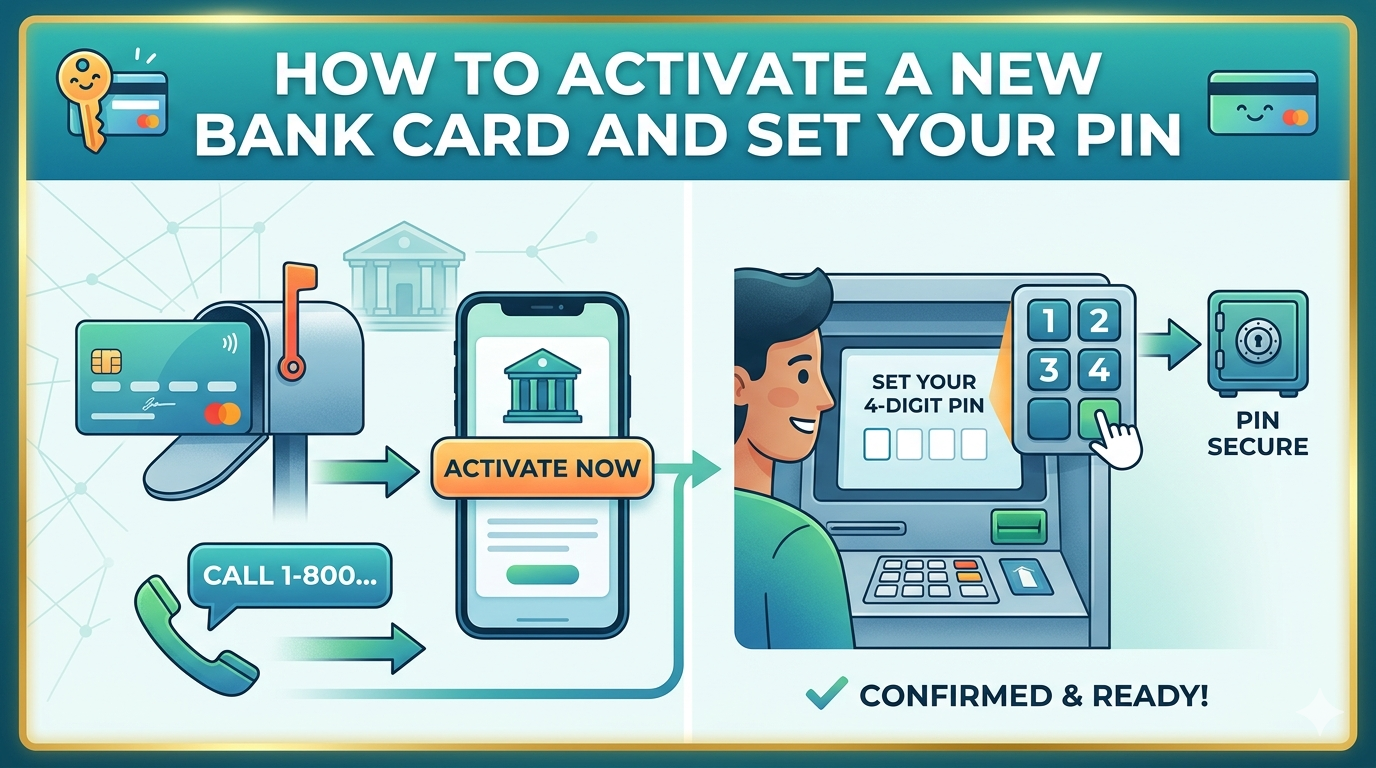
    Receiving a new bank card is exciting, but before you can use it for ATM withdrawals, shopping, or online payments, you must first activate the card and set your PIN. Most banks now make this process simple through ATMs, mobile banking apps, internet banking, or phone banking. In many cases, activation and PIN setup can be completed within just a few minutes. Common methods include ATM activation, OTP verification through the banking app, or calling the automated customer care line. :contentReference[oaicite:0]{index=0}

    This complete guide explains how to activate a new bank card and securely set your PIN step by step, plus the best security tips after activation.

    Step 1: Check the Card Package First

    Before activation, carefully check the envelope and welcome letter that came with your card. Many banks include:

    • Activation instructions
    • Temporary PIN or Green PIN details
    • Customer care number
    • Mobile app activation steps
    • Card expiry and CVV verification instructions

    Some banks require you to physically receive the card first before the activation button becomes available in the app. :contentReference[oaicite:1]{index=1}

    Step 2: Activate Your Card Through ATM

    The easiest and most common method is ATM activation.

    1. Visit your bank’s nearest ATM
    2. Insert the new card
    3. Select Activate Card or Set PIN
    4. Enter the OTP or temporary PIN sent to your mobile
    5. Create your new 4-digit PIN
    6. Confirm the PIN again

    Once done, the card becomes active immediately and is ready for ATM and POS use. :contentReference[oaicite:2]{index=2}

    Step 3: Activate Using Mobile Banking App

    Most modern banks allow full card activation from their mobile app.

    1. Log in to your mobile banking app
    2. Go to Cards or Manage Cards
    3. Select your new debit or ATM card
    4. Tap Activate Card
    5. Verify using CVV, expiry date, or OTP
    6. Create your new PIN

    This is one of the fastest methods because you can activate the card from home in under 2 minutes. :contentReference[oaicite:3]{index=3}

    Step 4: Activate Through Internet Banking

    If you prefer desktop banking, internet banking works similarly:

    • Log in to your bank website
    • Open the Debit Card section
    • Choose Generate / Set PIN
    • Verify with OTP
    • Create your 4-digit PIN

    This method is ideal if you use WordPress, office systems, or laptop-based financial work regularly.

    Step 5: Activate by Phone Banking

    Some banks also provide activation through customer care or IVR.

    1. Call the official customer care number
    2. Choose Card Activation
    3. Enter the last 4 digits of your card
    4. Verify DOB or account details
    5. Follow prompts to create your PIN

    Always use the number printed on the card sticker or official website only.

    How to Create a Strong ATM PIN

    When setting your PIN, avoid weak combinations like:

    • 1234
    • 0000
    • Your birth year
    • Last 4 digits of phone number

    Instead, use a unique number that is easy for you to remember but hard for others to guess.

    What to Do After Activation

    Once your card is active, do these important steps immediately:

    • Enable SMS transaction alerts
    • Turn on mobile app notifications
    • Set ATM withdrawal limits
    • Enable or disable international usage
    • Activate contactless tap payments if needed
    • Link card with mobile wallets

    Many banks now let you freeze or unfreeze your card instantly from the app for extra protection. :contentReference[oaicite:4]{index=4}

    Common Activation Problems

    • OTP not received
    • Wrong temporary PIN
    • Card not physically delivered yet
    • Registered mobile mismatch
    • Too many wrong PIN attempts

    If any of these happen, contact official bank support immediately or visit the nearest branch.

    Important Security Tips

    • Never share your PIN with anyone
    • Do not write PIN on the card
    • Cover keypad at ATM
    • Change PIN every few months
    • Use only official ATM machines

    Final Thoughts

    Learning how to activate a new bank card and set your PIN is an important first step in secure banking. Whether you activate it through ATM, mobile app, internet banking, or phone banking, the process is now fast and user-friendly.

    After activation, always secure your card with a strong PIN, alerts, and transaction controls so you can use it safely for ATM withdrawals, shopping, and online payments.

  • ATM Card vs Visa Card vs Mastercard: Which One Is Better?

    ATM Card vs Visa Card vs Mastercard: Which One Is Better?

    ATM Card vs Visa Card vs Mastercard: Which One Is Better?

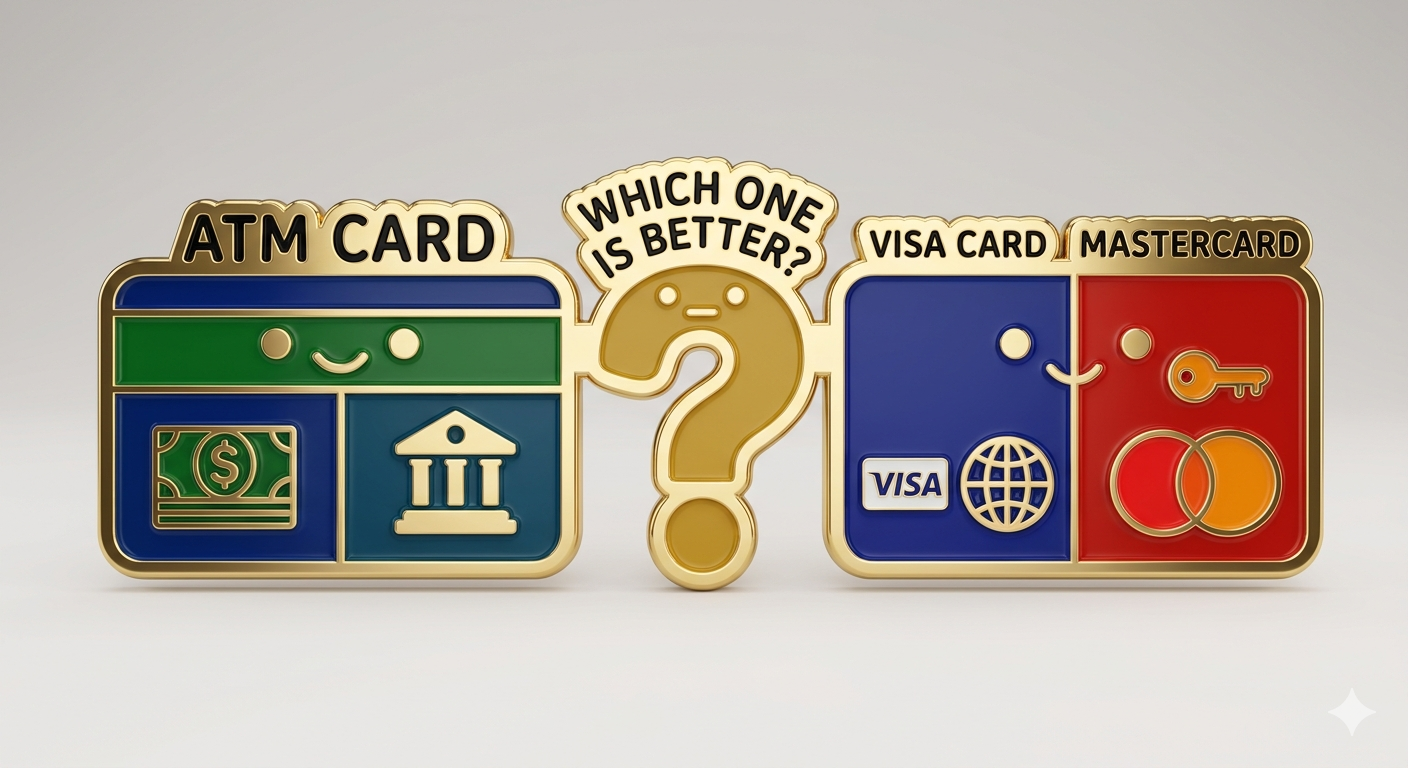
    When choosing a bank card, many people get confused between an ATM card, a Visa card, and a Mastercard. They may look similar, but they are not exactly the same. An ATM card is mainly used for cash withdrawals and basic ATM services, while Visa and Mastercard are global payment networks that allow online shopping, POS payments, contactless tap payments, and international use. For most users, the “better” option depends on whether they only need ATM access or want full digital payment features. In real-world use, Visa and Mastercard offer very similar acceptance and security, while the issuing bank usually matters more than the logo on the card. :contentReference[oaicite:0]{index=0}

    This complete guide explains the difference between ATM cards, Visa cards, and Mastercard debit cards, including features, benefits, limitations, and which one is best for your needs.

    What Is an ATM Card?

    An ATM card is a basic bank card designed mainly for ATM transactions. It allows you to:

    • Withdraw cash from ATMs
    • Check account balance
    • Change PIN
    • Mini statement
    • Transfer money through ATM

    Some ATM cards have limited merchant payment support, but many older cards work only on ATM networks and cannot be used for online shopping or international payments.

    What Is a Visa Card?

    A Visa card is usually a debit or credit card that runs on the Visa payment network. Visa itself is not the bank—it is the technology network that processes your payments between your bank and the merchant. Visa cards are accepted in more than 200 countries and support:

    • ATM cash withdrawal
    • Online shopping
    • POS machine payments
    • Tap-to-pay contactless payments
    • International transactions
    • Mobile wallet linking

    For most users, a Visa debit card gives much more flexibility than a standard ATM-only card. :contentReference[oaicite:1]{index=1}

    What Is a Mastercard?

    A Mastercard works almost exactly like Visa, but it uses the Mastercard global payment network instead. Like Visa, it supports ATM withdrawals, online shopping, merchant payments, international travel use, and mobile wallet compatibility.

    For day-to-day use, there is usually very little practical difference between Visa and Mastercard. The bank’s fees, cashback offers, ATM network access, and mobile banking features are often more important than the network brand itself. :contentReference[oaicite:2]{index=2}

    ATM Card vs Visa vs Mastercard: Key Differences

    Feature ATM Card Visa Card Mastercard
    ATM Cash Withdrawal Yes Yes Yes
    Online Shopping Usually No Yes Yes
    POS Store Payments Limited Yes Yes
    International Use No Yes Yes
    Contactless Payments No Yes Yes
    Rewards / Offers Rare Possible Possible

    Benefits of ATM Cards

    • Simple to use
    • Great for cash withdrawals
    • Lower fraud risk online (because online use is limited)
    • Good for senior citizens and basic users
    • Usually lower fees

    Benefits of Visa and Mastercard

    • Accepted worldwide
    • Perfect for online shopping
    • Supports international travel
    • Fast contactless payments
    • Mobile wallet support
    • Better merchant acceptance
    • Possible cashback and discounts

    Which One Is Better?

    If your main need is only ATM cash withdrawal and balance checking, then a simple ATM card is enough.

    But if you want modern banking features like:

    • Online shopping
    • Food delivery payments
    • Flight bookings
    • Netflix or subscription renewals
    • International usage
    • Tap payments

    Then Visa or Mastercard is clearly the better choice.

    Between Visa and Mastercard, there is usually no major difference for regular users because both are widely accepted globally. The smarter comparison is often between the bank’s annual fees, ATM limits, cashback, and app experience, not the payment network logo. :contentReference[oaicite:3]{index=3}

    Best Choice for Students and Daily Users

    For students, salary users, freelancers, and online shoppers, a Visa debit card or Debit Mastercard is usually the best option because it combines ATM access with secure online payments and better acceptance.

    Final Thoughts

    When comparing ATM Card vs Visa Card vs Mastercard, the best choice depends on your lifestyle. ATM cards are best for simple banking tasks, while Visa and Mastercard are far better for modern digital payments, online shopping, and travel use.

    For most people in today’s cashless world, a Visa or Mastercard debit card offers the best balance of convenience, security, and flexibility.

  • How to Keep Your Bank Card Safe from Fraud and Scams

    How to Keep Your Bank Card Safe from Fraud and Scams

    How to Keep Your Bank Card Safe from Fraud and Scams

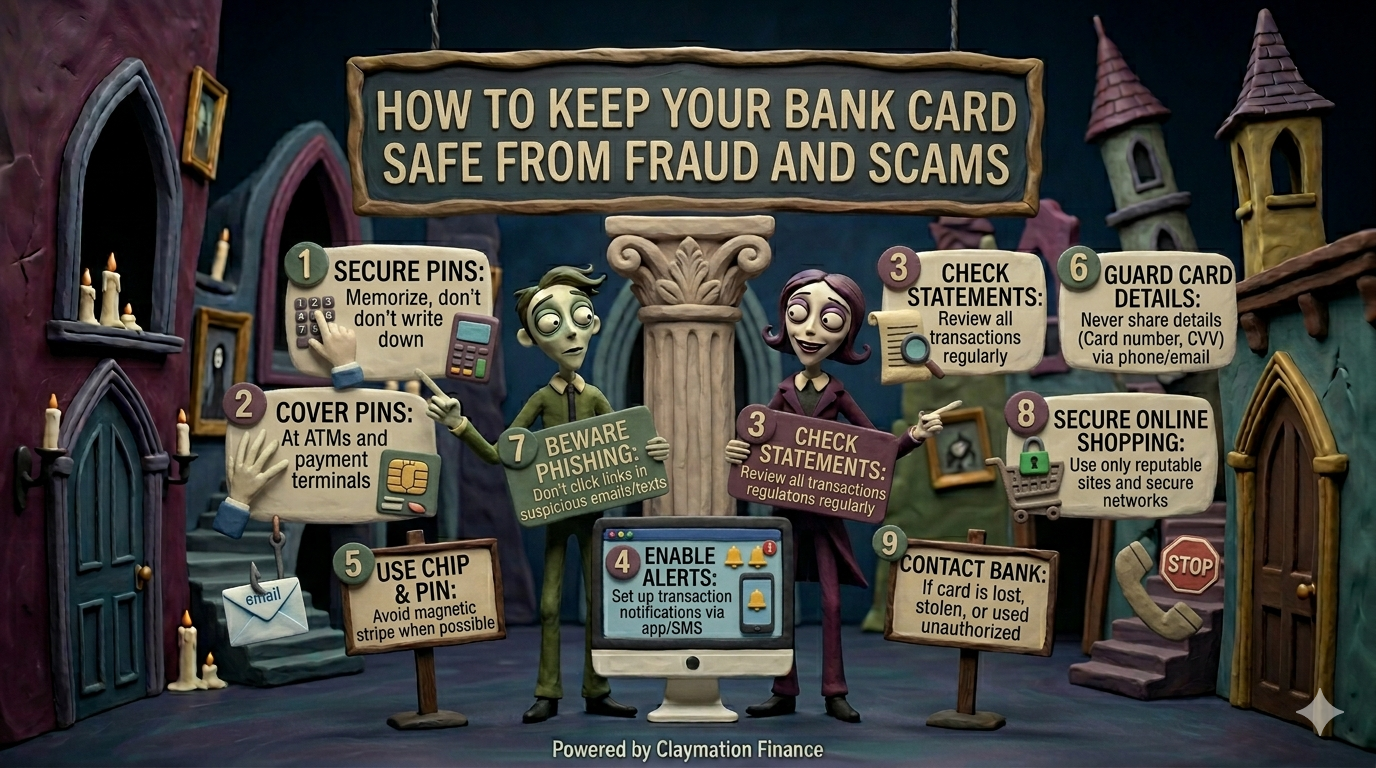
    In today’s digital banking world, keeping your bank card safe from fraud and scams is more important than ever. From phishing links and fake OTP calls to ATM skimming and online shopping fraud, scammers are constantly finding new ways to steal card details and money. The good news is that with the right habits, you can protect your debit or credit card and reduce the risk of unauthorized transactions. Security experts recommend using strong PIN protection, enabling transaction alerts, avoiding suspicious links, and regularly monitoring your bank statements. :contentReference[oaicite:0]{index=0}

    This complete guide explains how to protect your bank card from fraud and scams with practical, easy-to-follow steps for everyday users.

    1) Never Share Your PIN, OTP, or CVV

    The most important rule is simple: never share your PIN, OTP, CVV, or full card number with anyone. Banks never ask for this information over phone calls, SMS, email, or social media. Fraudsters often pretend to be bank staff and create urgency by saying your account is blocked or suspicious. Ignore such requests completely. :contentReference[oaicite:1]{index=1}

    2) Use Strong PINs and Change Them Regularly

    Avoid easy PINs like 1234, 0000, or your birth year. Use a unique PIN that is difficult to guess and change it every few months. This simple habit greatly reduces the risk if someone sees your PIN once.

    3) Enable SMS and App Transaction Alerts

    Turn on instant transaction notifications in your banking app. This helps you detect suspicious card activity immediately. The faster you spot fraud, the better your chance of blocking further losses. Experts recommend reviewing your account activity weekly, not just monthly. :contentReference[oaicite:2]{index=2}

    4) Lock or Freeze Your Card When Not in Use

    Most modern banking apps allow you to temporarily lock or freeze your debit card. If you rarely use online payments or international transactions, keep them disabled and only turn them on when needed. This is one of the best ways to stop fraud before it starts. :contentReference[oaicite:3]{index=3}

    5) Be Careful at ATMs and POS Machines

    ATM skimming is still one of the most common card scams. Before inserting your card:

    • Check if the card slot looks loose
    • Look for hidden cameras
    • Cover the keypad while entering PIN
    • Avoid isolated ATMs at night
    • Use bank branch ATMs when possible

    If anything feels unusual, use another ATM immediately. :contentReference[oaicite:4]{index=4}

    6) Avoid Clicking Suspicious Links

    Never click unknown links from SMS, WhatsApp, Facebook, email, or fake banking messages. These phishing links often steal card details, login passwords, and OTP codes. Always visit your bank website manually or use the official app instead of clicking links. Recent phishing scams are becoming more convincing with AI-generated messages, so caution is essential. :contentReference[oaicite:5]{index=5}

    7) Use Only Secure Websites for Online Shopping

    When paying online, always check:

    • Website starts with https://
    • Correct brand spelling
    • Trusted payment gateway
    • No suspicious popups

    Avoid saving your card details in browsers or unknown shopping apps unless absolutely necessary. :contentReference[oaicite:6]{index=6}

    8) Avoid Public Wi-Fi for Banking

    Public Wi-Fi in cafes, airports, and hotels can expose your data to hackers. Never use public networks for banking, OTP verification, or card payments. Use your mobile data connection instead whenever possible. :contentReference[oaicite:7]{index=7}

    9) Set Daily Transaction Limits

    Most banking apps allow you to set custom limits for:

    • ATM withdrawals
    • POS spending
    • Online shopping
    • International transactions

    Low daily limits reduce possible losses even if your card gets compromised. :contentReference[oaicite:8]{index=8}

    10) Report Lost Cards Immediately

    If your card is lost, stolen, or you notice unauthorized activity:

    • Freeze the card instantly
    • Call official customer care
    • Block online transactions
    • Request card replacement
    • File a fraud dispute

    Fast reporting significantly improves the chance of recovering stolen funds. :contentReference[oaicite:9]{index=9}

    Common Bank Card Scams to Watch For

    • OTP verification scams
    • Fake KYC update messages
    • Lottery or cashback fraud
    • ATM skimming devices
    • Fake customer care numbers
    • QR code scams
    • Digital wallet card token scams

    Scammers now even try to add your stolen card to mobile wallets using fake “bank verification” calls, so never approve unknown payment requests. :contentReference[oaicite:10]{index=10}

    Final Thoughts

    Knowing how to keep your bank card safe from fraud and scams can save you from major financial loss. The best protection comes from simple habits: never share OTPs, use secure websites, monitor alerts, freeze unused cards, and avoid suspicious links.

    Whether you use your debit card for daily shopping or online payments, staying alert and following these security tips will keep your money much safer in today’s digital world.

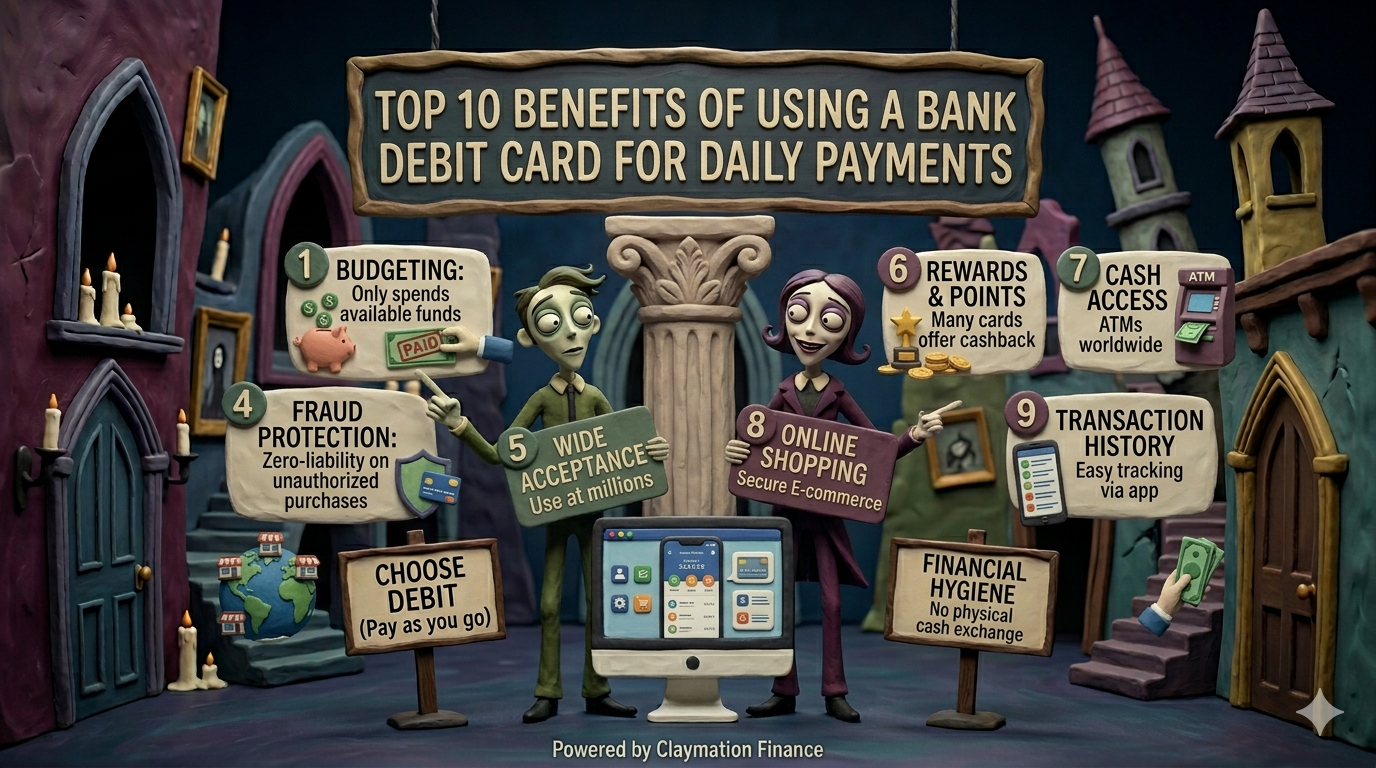
  • Top 10 Benefits of Using a Bank Debit Card for Daily Payments

    Top 10 Benefits of Using a Bank Debit Card for Daily Payments

    Top 10 Benefits of Using a Bank Debit Card for Daily Payments

    In today’s fast-moving digital world, using a bank debit card for daily payments has become one of the easiest and smartest ways to manage money. From buying groceries and paying utility bills to online shopping and fuel payments, debit cards make everyday transactions fast, secure, and cashless. Since the card is directly linked to your bank account, every payment is deducted instantly, helping you stay in control of your spending. This makes debit cards one of the best tools for students, salary earners, families, and small business owners. :contentReference[oaicite:0]{index=0}

    In this guide, we’ll explore the top 10 benefits of using a bank debit card for daily payments and why it is often the best choice for routine expenses.

    1) Instant Access to Your Own Money

    The biggest benefit of a debit card is direct access to your own funds. Every purchase is deducted instantly from your savings or current account, which means you are always spending real money you already have. This gives better control than borrowed-money payment methods. :contentReference[oaicite:1]{index=1}

    2) Better Budget Control

    Because a debit card only allows spending from your available balance, it naturally helps you stay within budget. This is perfect for daily expenses like groceries, transport, food delivery, and mobile recharges. It reduces the risk of unnecessary overspending and supports disciplined money habits. :contentReference[oaicite:2]{index=2}

    3) No Interest or Debt Risk

    Unlike credit cards, debit cards do not involve borrowing money. There are no interest charges, no monthly bills, and no debt trap. This makes them ideal for users who want stress-free daily transactions without worrying about repayment dates. :contentReference[oaicite:3]{index=3}

    4) Fast and Convenient Payments

    Debit cards make daily payments extremely quick. You can simply swipe, insert, tap, or pay online within seconds. Contactless “tap to pay” features make checkout lines faster in supermarkets, pharmacies, restaurants, and fuel stations.

    5) Safer Than Carrying Cash

    Carrying too much cash can be risky. A debit card reduces theft risk because your money stays securely in the bank. Modern cards also come with EMV chip security, PIN protection, OTP verification, and mobile app alerts for safer daily use. :contentReference[oaicite:4]{index=4}

    6) Easy Expense Tracking

    Every debit card payment is automatically recorded in your bank statement and mobile banking app. This helps you monitor daily expenses, identify spending habits, and manage monthly budgets much more easily than cash payments. :contentReference[oaicite:5]{index=5}

    7) Accepted Almost Everywhere

    One major advantage is wide acceptance. Debit cards are accepted in:

    • Supermarkets and local stores
    • Restaurants and cafes
    • Online shopping websites
    • Ride-sharing apps
    • Utility bill payment portals
    • ATMs worldwide

    This makes them perfect for almost every daily payment need.

    8) ATM Cash Withdrawal Anytime

    Even in a cashless world, sometimes cash is still needed. A debit card allows you to withdraw money from ATMs 24/7, check your balance, and even change your PIN whenever required. This gives excellent flexibility for both online and offline daily spending. :contentReference[oaicite:6]{index=6}

    9) Cashback, Discounts, and Offers

    Many modern banks now offer cashback, merchant discounts, reward points, and seasonal shopping offers on debit card transactions. This means even daily purchases like groceries, fuel, and food delivery can help you save money. :contentReference[oaicite:7]{index=7}

    10) Great for Students and Beginners

    A debit card is one of the best financial tools for students and first-time bank users. Since there is no borrowing involved, it teaches healthy money habits, spending discipline, and personal budgeting from an early stage.

    Best Daily Uses of a Debit Card

    • Grocery shopping
    • Fuel payments
    • Mobile recharge
    • Electricity and internet bills
    • Online shopping
    • Food delivery apps
    • Subscription renewals
    • ATM cash withdrawal

    Important Safety Tips

    • Never share your PIN
    • Enable SMS or app alerts
    • Use secure websites for online payments
    • Block card immediately if lost
    • Regularly check bank statements

    Final Thoughts

    The top benefits of using a bank debit card for daily payments include convenience, speed, budget control, safety, and zero debt risk. For routine expenses, debit cards offer one of the simplest and smartest ways to pay while staying financially disciplined.

    Whether you are a student, office worker, business owner, or homemaker, using a debit card daily can make your financial life easier, safer, and better organized.

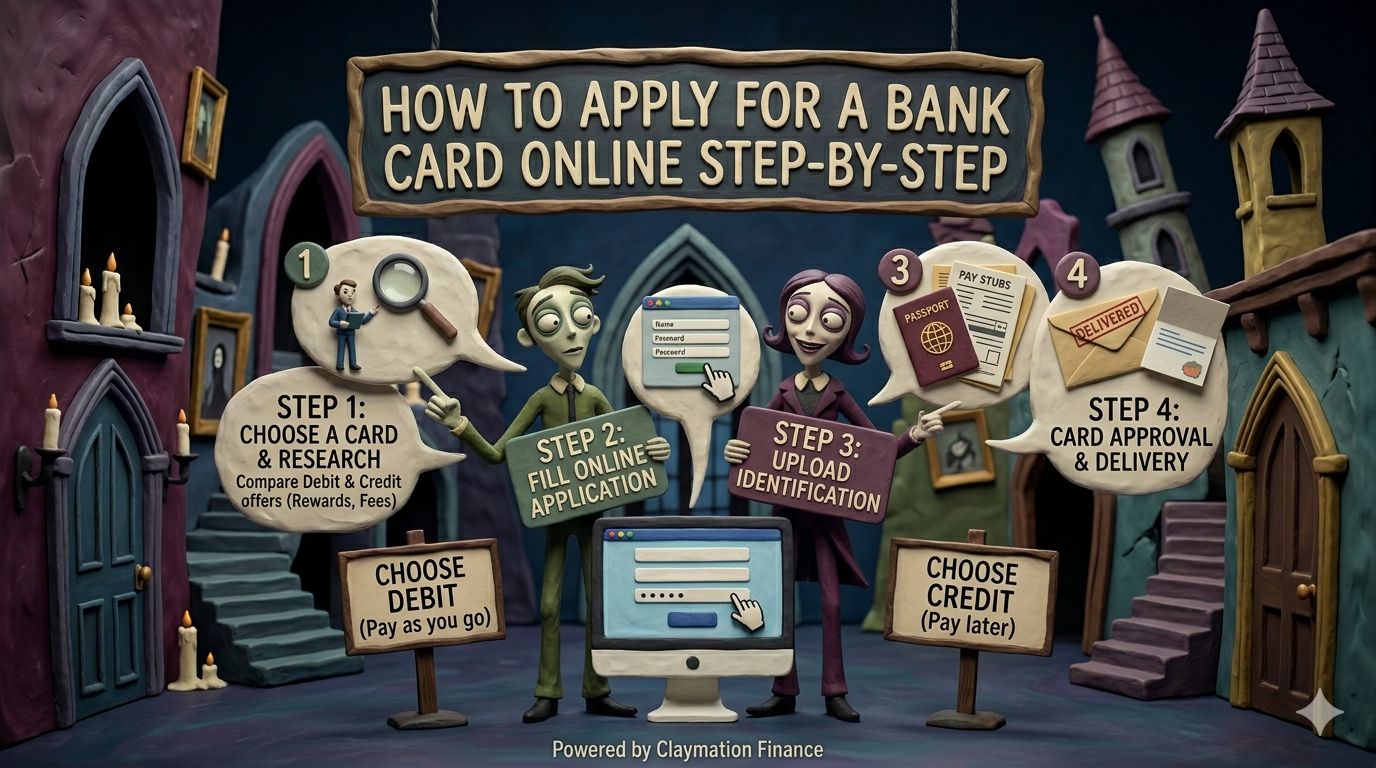
  • How to Apply for a Bank Card Online Step by Step

    How to Apply for a Bank Card Online Step by Step

    How to Apply for a Bank Card Online Step by Step

    In today’s digital era, applying for a bank card online has become quick, easy, and convenient. You no longer need to visit a bank branch or stand in long queues. Whether you want a debit card for daily transactions or a credit card for shopping and rewards, most banks now offer a fully online application process. With just a smartphone or computer and a stable internet connection, you can apply for a bank card within minutes.

    This complete guide will walk you through the step-by-step process of applying for a bank card online, including requirements, tips, and common mistakes to avoid.

    What You Need Before Applying

    Before starting your application, make sure you have the following documents and information ready:

    • Valid National ID card or passport
    • Recent passport-size photo
    • Mobile number linked to your ID
    • Email address
    • Proof of income (for credit cards)
    • Bank account details (for debit cards)

    Having these ready will make the process faster and smoother.

    Step-by-Step Process to Apply for a Bank Card Online

    Step 1: Choose the Right Type of Card

    First, decide which type of bank card you need:

    • Debit Card: Linked to your bank account for everyday spending
    • Credit Card: Allows you to borrow money and pay later
    • Prepaid Card: Loaded with a fixed amount for controlled spending

    Choose a card based on your financial needs, lifestyle, and eligibility.

    Step 2: Visit the Bank’s Official Website or App

    Go to your preferred bank’s official website or download their mobile banking app. Always ensure the website is secure (look for HTTPS in the URL) to avoid fraud.

    Navigate to the “Cards” or “Apply Now” section to start your application.

    Step 3: Fill Out the Online Application Form

    You will need to enter your personal details such as:

    • Full name
    • Date of birth
    • Address
    • Phone number
    • Email address
    • Occupation and income details (for credit cards)

    Make sure all information is accurate to avoid delays or rejection.

    Step 4: Upload Required Documents

    Next, upload scanned copies or clear photos of your documents, including:

    • National ID or passport
    • Proof of address
    • Income documents (salary slip or bank statement)

    Ensure the images are clear and readable to prevent verification issues.

    Step 5: Complete Verification (OTP or eKYC)

    Most banks use OTP (One-Time Password) or eKYC (electronic Know Your Customer) for verification. You may receive a code on your phone or email to confirm your identity.

    Some banks may also ask for a video KYC process where you verify your identity through a short live video call.

    Step 6: Submit the Application

    After completing all details and verification, review your application carefully and click the “Submit” button.

    You will receive a confirmation message or email with your application reference number.

    Step 7: Wait for Approval

    The bank will review your application and documents. Approval time may vary:

    • Debit cards: Usually approved instantly or within 1–2 days
    • Credit cards: May take 3–7 working days

    The bank may contact you for additional information if needed.

    Step 8: Receive Your Bank Card

    Once approved, your bank card will be delivered to your registered address. Some banks also offer instant virtual cards that you can use immediately for online transactions.

    Step 9: Activate Your Card

    After receiving your card, you need to activate it. You can do this by:

    • Using the bank’s mobile app
    • Visiting an ATM
    • Calling customer care

    Set your PIN and your card is ready to use.

    Tips for a Successful Application

    • Choose a card that matches your income and eligibility
    • Provide accurate and complete information
    • Maintain a good credit score (for credit cards)
    • Use a secure internet connection
    • Double-check documents before uploading

    Common Mistakes to Avoid

    • Submitting incorrect personal details
    • Uploading unclear or invalid documents
    • Applying for multiple cards at once
    • Ignoring eligibility requirements

    Avoiding these mistakes can improve your chances of quick approval.

    Benefits of Applying for a Bank Card Online

    • Fast and convenient process
    • No need to visit a bank branch
    • 24/7 application availability
    • Quick approval and tracking
    • Access to exclusive online offers

    Online applications save time and give you more control over your financial choices.

    Conclusion

    Applying for a bank card online is simple, fast, and secure if you follow the correct steps. From choosing the right card to submitting documents and activating your card, the entire process can be completed from the comfort of your home. Whether you are applying for a debit card for everyday use or a credit card for rewards and flexibility, understanding the process ensures a smooth experience.

    By following this step-by-step guide, you can confidently apply for your bank card and start enjoying the benefits of digital banking today.

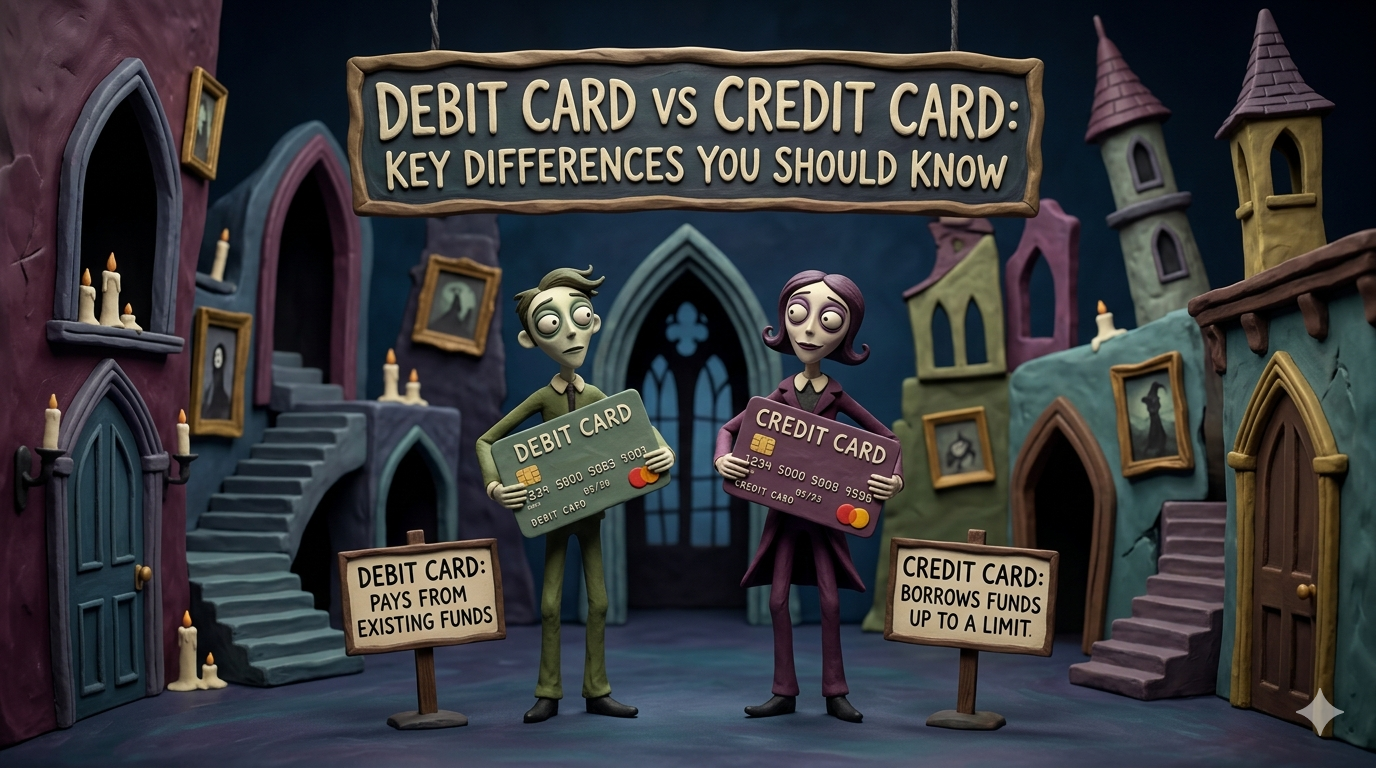
  • Debit Card vs Credit Card: Key Differences You Should Know

    Debit Card vs Credit Card: Key Differences You Should Know

    Debit Card vs Credit Card: Key Differences You Should Know

    In today’s digital banking world, both debit cards and credit cards are essential payment tools. While they may look similar, they work in completely different ways. Understanding the difference between a debit card and a credit card is important for managing your money wisely, avoiding debt, and choosing the right payment method for your lifestyle. The main difference is simple: a debit card uses your own money directly from your bank account, while a credit card lets you borrow money from the bank and repay it later. :contentReference[oaicite:0]{index=0}

    In this complete guide, we will explain the key differences, features, pros and cons, and help you decide which card is best for your financial needs.

    What Is a Debit Card?

    A debit card is linked directly to your savings or current bank account. Whenever you make a payment, the amount is instantly deducted from your available balance. This means you can only spend the money you already have in your account. Debit cards are commonly used for ATM cash withdrawals, online shopping, POS payments, and utility bill payments. :contentReference[oaicite:1]{index=1}

    Because debit cards use your own funds, there is no borrowing involved and no interest charges. They are ideal for daily spending and budgeting.

    What Is a Credit Card?

    A credit card allows you to borrow money from the bank up to a pre-approved limit. Instead of deducting money from your bank account immediately, the bank pays the merchant first, and you repay the bank later through a monthly bill. If you do not pay the full bill on time, interest charges may apply. :contentReference[oaicite:2]{index=2}

    Credit cards are useful for emergencies, large purchases, travel bookings, rewards, and building your credit history.

    Debit Card vs Credit Card: Key Differences

    Feature Debit Card Credit Card
    Money Source Your bank account balance Borrowed money from bank
    Payment Time Instant deduction Pay later
    Interest No interest Interest if unpaid
    Credit Score No impact Helps build credit score
    Rewards Limited offers Cashback, points, travel rewards
    Overspending Risk Low Higher

    The biggest difference is whether you are spending your own money or borrowing from the bank. :contentReference[oaicite:3]{index=3}

    Advantages of a Debit Card

    • Helps control spending
    • No debt risk
    • No interest charges
    • Easy ATM withdrawals
    • Simple to get with a bank account
    • Great for students and beginners

    Debit cards are best for people who want better budgeting and do not want to deal with monthly bills.

    Advantages of a Credit Card

    • Builds credit history
    • Useful in emergencies
    • Offers cashback and reward points
    • Travel perks and insurance benefits
    • Better fraud protection
    • Useful for hotel and flight bookings

    Many banks now provide excellent cashback, EMI, and shopping discount offers on credit cards. :contentReference[oaicite:4]{index=4}

    Disadvantages of Debit Cards

    • No credit score improvement
    • Limited fraud protection compared to credit cards
    • No major rewards programs
    • Transaction may fail if account balance is low

    Disadvantages of Credit Cards

    • High interest charges if unpaid
    • Late fees and penalties
    • Can lead to debt trap
    • May encourage overspending

    If not used responsibly, credit cards can create serious financial problems because of compounding interest and minimum due traps.

    Which One Is Better?

    The answer depends on your financial habits.

    If you want to spend only what you have and avoid debt, a debit card is the better option. But if you want rewards, stronger fraud protection, travel benefits, and the ability to build your credit score, a credit card is often the smarter choice—provided you pay the full balance on time. :contentReference[oaicite:5]{index=5}

    For most people, the best strategy is to use both wisely:

    • Use debit card for daily expenses and ATM withdrawals
    • Use credit card for online shopping, travel, and reward-based spending

    Best Use Cases for Each Card

    Use Debit Card For:

    • Groceries
    • Cash withdrawals
    • Budget-friendly spending
    • Students and salary users

    Use Credit Card For:

    • Travel bookings
    • Expensive gadgets
    • Online subscriptions
    • EMI purchases
    • Emergency medical bills

    Final Thoughts

    When comparing debit card vs credit card, the right choice depends on how you manage money. Debit cards keep your spending under control because they use your own funds instantly. Credit cards offer more flexibility, rewards, and financial benefits but require discipline.

    The smartest approach is to understand the strengths of both and use them according to your needs. If used correctly, both cards can make your financial life easier, safer, and more rewarding.